
Metaverse In The Manufacturing Industry
We build metaverse manufacturing development solutions: digital twins that sync with your live production data, AR/VR training environments built around your actual procedures, and remote collaboration tools that plug into the systems you already run.
DID YOU KNOW!
“$1.4 trillion in combined market opportunity by 2033. Growth rates ranging from 28% to 40% annually. Your competitors aren't waiting. Arizing Pixel Studio is helping organizations capture this value now.”
Explore What the Metaverse Can Bring to Manufacturing
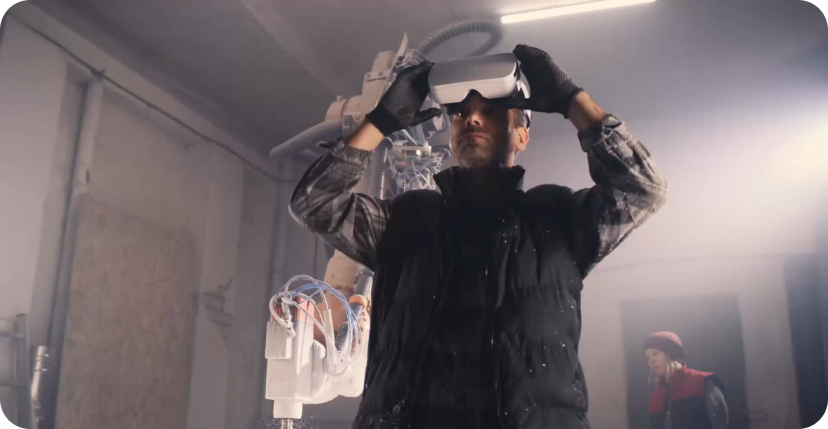
Manufacturing businesses can use virtual environments to explore production processes, replicate facilities, train employees, and collaborate without being limited by physical locations. Arizing Pixel offers metaverse manufacturing development services to bring these applications to life through custom virtual experiences.
 Virtual Manufacturing Spaces
-
Digital Facility Replicas
-
Process Simulation
- Employee Training
- 3D Product Visualization
- Remote Collaboration
DID YOU KNOW!
According to the Market Statsville Group or MSG, the global metaverse in the manufacturing market size is forecasted to grow from $12,936.3 million in 2021 to $24,416.2 million by 2030, which represents a compound annual growth rate of 38.6% from 2022 to 2030.
Where Metaverse Manufacturing Development Pays Off: 9 Real Use Cases
Metaverse manufacturing development supports specific, high-value tasks across the production lifecycle. Here's where it actually moves the needle.

Collaborative Product Design
Designers, vendors, and customers work in the same virtual environment to co-create safer, production-optimized designs, without location constraints or sequential handoffs slowing the process.


Process and Supply Chain Auditing:
Real-time monitoring of supply chain materials and manufacturing processes improves procurement transparency and catches inefficiencies while they're still cheap to fix.


Virtual Production Simulation
Immersive technology in manufacturing simulates real production lines, opening up more testing within existing budgets and catching safety or efficiency issues before they reach physical equipment.


Predictive Maintenance
Digital twins fed by live sensor data flag equipment issues before they cause downtime, shifting maintenance from reactive to predictive.


Immersive Buying Experiences
Virtual showrooms give buyers a real, walkable view of products and facilities, an experience a spec sheet or 2D render can't replicate.


Digital Twins for Product Development
Physical products get built from virtual designs, and digital assets get layered onto physical items, giving R&D real, validated decisions to act on instead of guesswork.


Remote Repair and Field Service
AR and VR let field technicians resolve equipment issues without traveling on-site, cutting resolution time and cost without cutting repair quality.


Safer Employee Training
Immersive manufacturing technology lets employees train on precise, repeatable virtual scenarios before facing real conditions, reducing onboarding time and the risk of learning on live equipment.


After-Sales Resolution
Post-sales issues get resolved faster through immersive support tools, improving customer experience without adding support headcount.

Engage Globally, Innovate Endlessly, and Scale Effortlessly.
Propel Your Brand into a Future Where Immersive Excellence Steers Unparalleled Success with Our Expertise to Build in Metaverse Spaces.
Metaverse Manufacturing Development Services We Offer
Six services, one integrated team, no handoffs between separate vendors for the parts of a metaverse for industry development project that actually need to work together.

Designs for Manufacturing Products
Our team of experts at Arizing Pixel helps create immersive, collaborative virtual design solutions for manufacturing products starting from the designers, and vendors to customers to co-create safe as well as production-optimized designs.


AR/VR Training Environment Development
Immersive technology in manufacturing built around your actual procedures and equipment, for safety-critical tasks and new-hire onboarding.


Systems Integration
The connection layer between immersive technology and the production systems you already run, the work that determines whether a build gets adopted or ignored.


Virtual Production Simulation
Simulated production lines for testing process changes, layout adjustments, and safety improvements before committing to physical changes.


Remote Collaboration Platforms
Shared 3D environments for distributed engineering and design teams, replacing static CAD files and video calls with an immersive manufacturing technology workspace teams actually work inside together.


AR-Guided Field Service Solutions
Remote repair support that lets a specialist walk a technician through a fix without travel, cutting resolution time and cost.

In-House vs. Outsourced: How to Choose a Metaverse Manufacturing Partner
Manufacturing businesses evaluating metaverse development face a real choice: build the capability internally or bring in a partner who's already solved the integration work. Here's how the two compare on what actually matters for this kind of project.
| Criterion | Outsourced Partner | In-House Team |
|---|---|---|
| Team and Expertise | Specialists across digital twin architecture, AR/VR, and systems integration available from day one |
Specialists across digital twin architecture, AR/VR, and systems integration available from day one |
| Systems Integration Experience | Prior experience connecting to live MES, QMS, and IIoT data |
Integration challenges need to be solved for the first time, on your timeline |
| Speed to Pilot | Working pilot typically delivered in 2 to 4 months | The same window may be spent building foundational infrastructure |
| Long-Term Ownership | Partner retains deep platform expertise while supporting ongoing development |
Full internal control and institutional knowledge over time |
| Best Fit | Ideal when starting from zero and needing a working pilot quickly |
Better suited to teams with existing AR/VR or digital twin expertise building long-term capabilities |
Not Sure Which Approach Fits Your Manufacturing Team?
6 Steps to a Metaverse Manufacturing Deployment That Works
Most metaverse manufacturing projects fail on integration, not ambition. Here's the actual sequence that gets a build connected to your real production data instead of sitting as an isolated demo.
01
Production Systems Audit
We map your actual MES, QMS, and IIoT infrastructure first, since a digital twin that can't read your live production data is just a 3D model. This step decides what's technically possible before anything else gets designed.
02
Digital Twin & Data Architecture
We establish the data pipeline between physical operations and the virtual environment, allowing live sensor and production data to continuously update the digital representation as part of metaverse manufacturing development.
03
XR Environment & Scenario Build
04
Systems Integration & Live Data Testing
We connect the build to your actual MES/QMS/IIoT systems and test that data flows correctly under real conditions, the step most immersive technology in manufacturing projects skip and then fail on.
05
Pilot Deployment on One Line:
The build goes live on a single production line or one use case first, validating real-world performance before any wider rollout gets scoped.
06
Scale, Monitor, and Expand:
Once the pilot proves out, we expand to additional lines or facilities, with ongoing monitoring against live production data, not a one-time delivery that goes stale.
How Long Does Metaverse Manufacturing Development Take?
Delivery timelines vary with scope and complexity. For a well-scoped metaverse manufacturing development engagement, these are the realistic ranges to expect:
Focused Pilot
(one use case, one production line)
2 to 4 months
Mid-scope deployment
(multiple use cases, one facility)
5 to 8 months
Enterprise-wide rollout
(multiple facilities, full digital twin integration)
9 to 14 months
A pilot on one line, one use case, before expanding is almost always the right sequence. Projects that try to roll out enterprise-wide on day one tend to spend the first several months on infrastructure that a smaller pilot would have validated first.
The Arizing Pixel Advantage
Manufacturing metaverse projects fail most often on integration, not ambition. Here's what actually differentiates working with our team.


Let’s Build Your Manufacturing Metaverse
Frequently Asked Questions