
✨ AI Summary
- AI is becoming an integral part of game art workflows, with a focus on aligning AI and human creativity across the production pipeline.
- According to a report, 36% of game industry professionals now incorporate generative AI tools into their work.
- However, with 64% of visual and technical artists having a negative view of generative AI, it’s crucial for studios to introduce AI-assisted workflows within a clear framework that outlines responsibilities, review processes, and quality standards.
- The global AI in games market is projected to grow from $2.87 billion in 2025 to $3.4 billion in 2026, reinforcing the importance of thoughtful AI implementation.
- The blog post further discusses how AI fits into different stages of game art production including ideation, 3D modeling, animation, environment design, and trailers.
AI is becoming part of more game art workflows, making the focus less about choosing between AI and human creativity and more about finding the right role for each across the production pipeline. For funded studios in 2026, the key decision is where AI-assisted tools can support efficiency and where experienced art direction leads quality, consistency, and IP alignment. According to the GDC 2026 State of the Game Industry report, 36% of game industry professionals now use generative AI tools as part of their jobs.
This guide explores where AI fits across the game art pipeline, from early concept exploration to final production, and how teams can align AI-assisted tools with human expertise at every stage.
Why Artist Sentiment in 2026 Matters to Production Decisions
The GDC 2026 data provides an important signal for production teams. When 64% of visual and technical artists view generative AI negatively, studios benefit from introducing AI-assisted workflows through a clear governance framework that defines responsibilities, review processes, and quality standards. A structured approach helps teams align tools with the right production stages while maintaining consistent creative direction and workflow expectations.
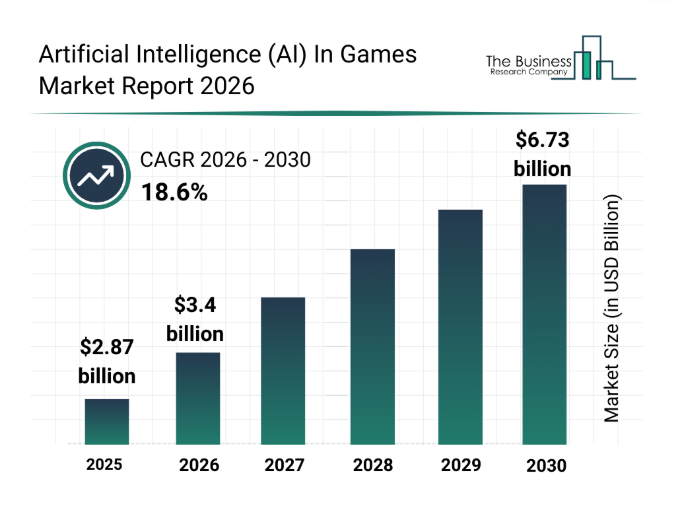
The market adds further momentum to this discussion. The global AI in games market is projected to grow from $2.87 billion in 2025 to $3.4 billion in 2026 at a compound annual growth rate of 18.5%, according to The Business Research Company. Investment in AI tooling continues to grow, making thoughtful implementation increasingly important for studios building efficient production pipelines.
Two findings from the GDC 2026 data provide additional context:
- AI use in production is concentrated in research, brainstorming, and coding assistance
- Only 5% of studios use AI for player-facing features, meaning human creative teams continue to lead the majority of final player-facing experiences
Together, these findings highlight a clear workflow pattern. AI-assisted tools create the greatest value in stages focused on research, exploration, speed, and variation. Human art direction leads the stages where visual consistency, IP fidelity, technical execution, and player-facing quality define the final outcome.

Ready to Find the Right Balance Between AI and Human Expertise?
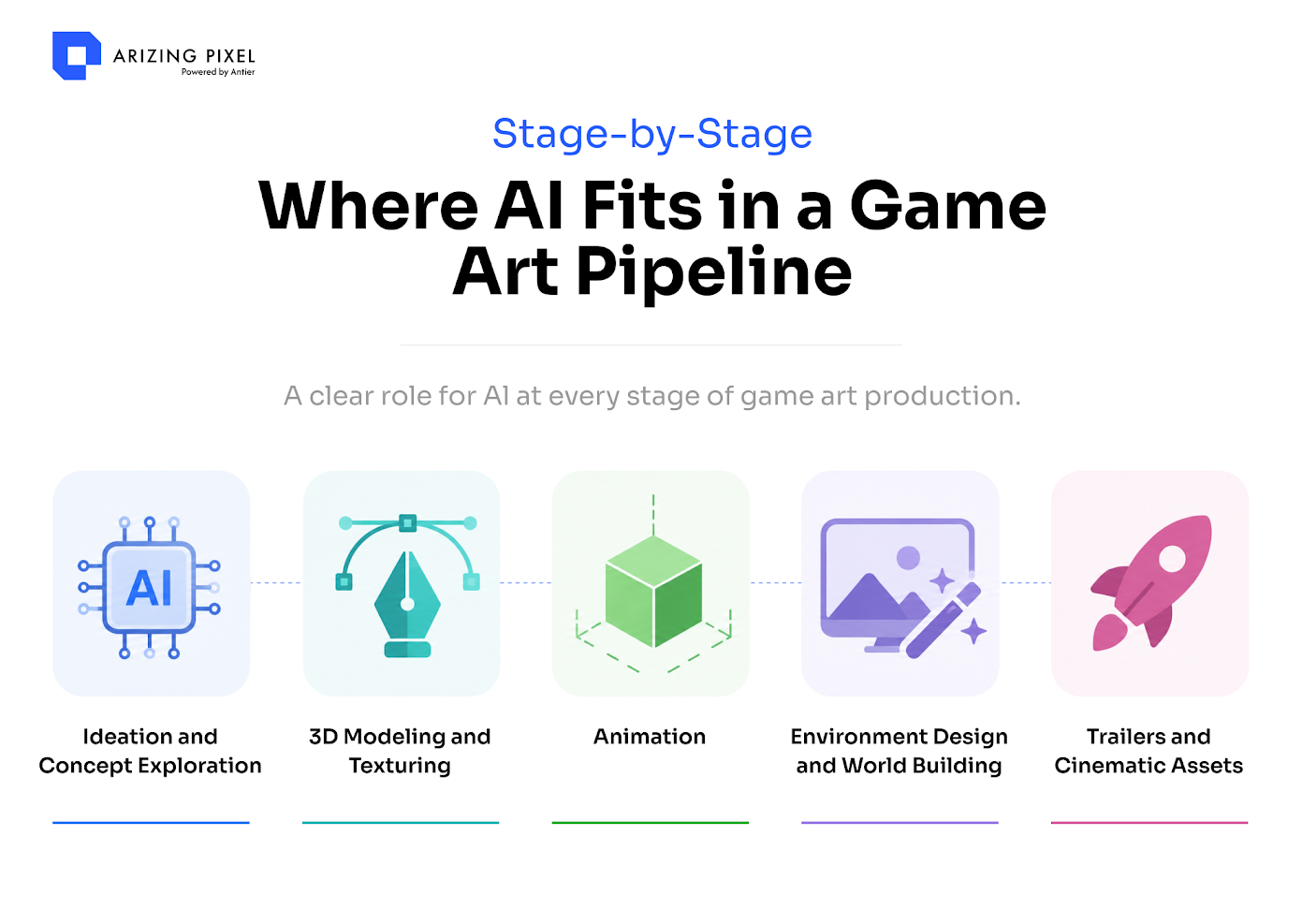
Stage-by-Stage: Where AI Fits in a Game Art Pipeline
1. Ideation and Concept Exploration
AI-assisted workflows can significantly accelerate early-stage exploration. Tools such as Midjourney, Adobe Firefly, and Scenario.gg can quickly generate mood board references, palette variations, and silhouette studies, giving concept teams a broader starting point for exploration.
The strongest workflow treats these outputs as reference material that supports the concept development process.
- Typical timeline contribution: Initial reference gathering can move from 3–5 days to under one day per asset category
- Human role: The art director selects and annotates relevant references according to the project’s style guide before concept refinement begins
- Tools in use: Midjourney, Stable Diffusion, Adobe Firefly, and Scenario.gg for ideation; Adobe Photoshop and Procreate for concept refinement
- Production focus: Human creative direction ensures references support distinctive silhouettes, visual identity, and project-specific IP requirements
This approach supports both character and environment concept development. Faster reference generation gives concept artists more time for the design decisions that differentiate a title.
2. 3D Modeling and Texturing
3D modeling combines creative and technical requirements, making experienced artist ownership central to this stage. Maya and ZBrush workflows involve topology planning, polygon budgets, UV layouts, and rig compatibility requirements that depend on production-specific technical knowledge.
AI-assisted texturing can support material variation on established asset categories. Substance Painter’s AI-assisted capabilities and Adobe’s generative fill features can help teams explore texture directions while technical artists review the results against project specifications.
- Human role: 3D artists lead topology, UV layouts, LOD tiers, and rig compatibility
- AI-assisted role: Texture and material variation
- Tools in use: Maya, ZBrush, Blender, Substance Painter, and Marmoset Toolbag
- Timeline contribution: AI-assisted texturing can reduce material variation time by an estimated 30–40% on established asset categories
- Quality process: Each asset moves through a technical sign-off review before engine handoff
Game art outsourcing is particularly valuable at this stage because artistic quality and technical pipeline knowledge work together. Effective asset production considers how every model performs within the target engine, platform requirements, memory budgets, and gameplay environment.
3. Animation
Production-quality animation depends on timing, weight, control schemes, character behavior, and engine architecture. Procedural systems and motion-capture retargeting pipelines provide valuable support, while experienced animators lead the performance and gameplay requirements of primary character animation.
- Tools in use: Maya, Unreal Engine Control Rig and Sequencer, Unity Animation Rigging, and MotionBuilder
- AI-assisted role: Procedural secondary motion and selected retargeting support
- Human role: Lead animators guide keyframe passes, character performance, timing, and blend-tree behavior
- Production opportunity: Secondary and environmental motion can benefit from
procedural layering for elements such as hair, cloth, and environmental effects
2D game art services involving frame-by-frame animation also benefit from direct animator involvement, particularly for stylized projects where visual timing and consistency define the final result.
4. Environment Design and World Building
Game art environment design offers opportunities for AI-assisted exploration alongside specialized production work. AI tools can support biome references, architectural inspiration, lighting studies, and color script development.
The full environment pipeline then brings concept, modeling, dressing, integration, and optimization together around the requirements of the game world.
- AI-assisted use: Reference generation, lighting exploration, and color script development
- Human-led work: Level layout, interactive element placement, asset integration, and performance optimization
- Tools in use: Unreal Engine 5, Unity HDRP, SpeedTree, and World Creator
- Typical outsourcing timeline: A mid-complexity environment set covering exterior, interior, and transition zones generally requires 6–12 weeks, depending on asset volume and revision cycles
A specialist environment design pipeline connects concept, 3D modeling, lighting, and technical requirements through coordinated review cycles. This integrated approach supports visual consistency across the full environment rather than treating each stage as an isolated handoff.
5. Trailers and Cinematic Assets
Game trailer video production can use AI-assisted tools for color references and pacing analysis while directors and editors lead the creative decisions that shape the final story.
Shot selection, narrative structure, music timing, game capture, and platform adaptation all depend on an understanding of the game and its audience.
- Production stages: Concept storyboard, animatic, 4K game capture, post-production color grading, and final delivery
- AI-assisted role: Color grading references and pacing reference analysis
- Human role: Direction, editing, narrative development, and final creative execution
- Delivery formats: 16:9 theatrical, 9:16 social content, and platform-specific versions for Steam, YouTube, and app store submissions
Cinematic, 2D cutout, classic, and stylized 3D trailer formats also benefit from artists who maintain a consistent connection between the trailer’s visual language and the in-game art style.
Pipeline Decision Table: AI-Assisted and Human-Led Responsibilities
The role of AI varies across the game art pipeline. This breakdown shows where AI-assisted workflows add value and where human expertise leads production.
| Pipeline Stage | AI-Assisted Role | Human-Led Role | Primary Tools | Ownership |
|---|---|---|---|---|
| Ideation | References, palettes | Style and concept direction | Midjourney, Firefly | Shared |
| Concept Art | Reference support | Final illustration | Photoshop, Procreate | Human-led |
| 3D Modeling | Workflow support | Modeling, topology, UVs | Maya, ZBrush, Blender | Human-led |
| Texturing | Material variations | Technical review | Substance Painter, Marmoset | Shared |
| Animation | Secondary motion | Primary animation | Maya, Unreal Control Rig | Human-led |
| Environment | References, lighting | Layout and integration | Unreal Engine 5, Unity HDRP | Human-led |
| Trailer Production | Color and pacing references | Direction and editing | Premiere Pro, After Effects | Human-led |
The strongest pipeline combines AI-assisted efficiency with human expertise to maintain creative quality, technical standards, and visual consistency.
The Right AI-Human Balance Starts Here
When a Specialist Game Art Partner Adds Value to an AI-Assisted Pipeline
AI tools become part of an effective production workflow through governance, clear ownership, and experienced review processes. A specialist game art outsourcing partner can bring established pipeline practices that help teams introduce AI-assisted workflows with consistency.
- Style Guide Governance: A structured review process evaluates AI-generated references against the project’s visual direction before they move into production. This helps every artist work from references aligned with the established creative language of the title.
- Technical Production Experience: Technical artists understand how texture passes, asset variations, and production decisions connect with platform-specific memory budgets, engine requirements, and delivery specifications. This experience supports efficient decisions throughout the production cycle.
- Experienced Art Direction: The central question for an art director is whether an output supports the project’s style guide, IP requirements, and milestone format. An experienced production team evaluates AI-assisted references and outputs within this broader project context.
Conclusion
AI in game art is ultimately a pipeline architecture decision. The GDC 2026 data shows that adoption is growing while artist sentiment continues to play an important role in how studios approach these tools. The most effective workflows place AI-assisted tools where they support research, exploration, iteration, and variation. Human art direction leads the quality standards, creative consistency, technical execution, and milestone delivery that shape the final player experience. At Arizing Pixel, our game art production approach brings together artists, animators, technical specialists, and world builders across the pipeline. AI-assisted workflows can support specific production stages, while experienced creative and technical teams guide quality throughout the project.
Frequently Asked Questions
01. How is AI being integrated into game art workflows in 2026?
AI is becoming part of game art workflows by supporting efficiency in production while human creativity focuses on quality, consistency, and IP alignment.
02. What percentage of game industry professionals are using generative AI tools?
According to the GDC 2026 report, 36% of game industry professionals now use generative AI tools as part of their jobs.
03. What are the main areas where AI-assisted tools add value in game production?
AI-assisted tools create the greatest value in stages focused on research, brainstorming, speed, and variation, while human art direction leads in visual consistency and player-facing quality.

