✨ AI Summary
- In 2026, hiring a blockchain game developer is highly competitive due to a scarcity of qualified candidates.
- CryptoRecruit's analysis reveals that for certain roles, only 500 suitable candidates exist globally, with approximately 5,000 companies vying to secure their services.
- Hiring a dedicated blockchain game development studio, rather than sourcing talent from a freelancer marketplace, provides comprehensive services under one contract, including smart contract architecture, tokenomics design, NFT infrastructure, and playable game mechanics.
- This blog post offers insights into why studios offer a competitive edge, how to evaluate developers, and the best blockchain for different games.
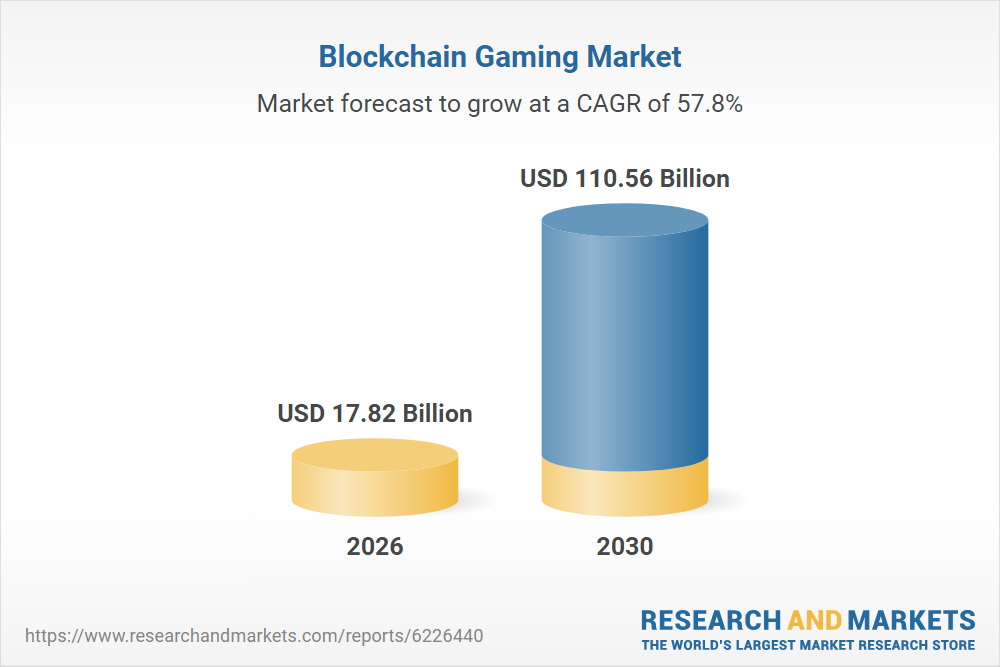
- The highly lucrative blockchain gaming market, worth $17.82 billion in 2026, demands expertise in multiple areas for successful execution.
Hiring a blockchain game developer in 2026 means sourcing from one of the most constrained talent pools in software. According to a March 2026 analysis by CryptoRecruit, certain blockchain specialist roles have as few as 500 qualified candidates globally against roughly 5,000 companies competing to fill them. That ratio shapes every decision in this process. A freelancer marketplace will surface names. A dedicated blockchain game development studio brings the full stack, smart contract architecture, tokenomics design, NFT infrastructure, and playable game mechanics under a single accountable relationship. The difference matters most at the moment you need chain selection, economic design, and gameplay to move together.
In this piece, you’ll learn:
- Why studios have an edge
- How to evaluate developers
- Which chains fit different games
- Studio vs. freelancer
- How to measure outcomes
The Market Reality Behind This Hiring Decision
Blockchain gaming has become a significant market in 2026. Research and Markets places the blockchain gaming market at $17.82 billion in 2026, growing from $11.22 billion in 2025 at a compound annual growth rate of 58.8%, with a projected $110.56 billion by 2030.
Player activity confirms commercial depth alongside that revenue growth: DappRadar’s State of Blockchain Gaming Q3 2025 report recorded 4.66 million daily unique active wallets, representing 25% of all Web3 wallet activity even as the broader dapp ecosystem declined by 22%. These numbers frame the hiring context precisely. Capital is available, player demand is real, but execution is the bottleneck.
Blockchain Game Development Studio vs. Freelancer: A Side-by-Side Evaluation
The most common early mistake funded founders make is conflating access to talent with access to a production system. A freelancer marketplace solves the former. Only a structured game development studio solves the latter.
| Evaluation Dimension | Dedicated Studio | Freelancer Aggregation |
|---|---|---|
| Accountability | Single contractual relationship covering full scope | Distributed across multiple individuals with no unified owner |
| Chain Expertise | Multi-chain architecture built into the service offering | Varies by individual; chain coverage is often single-chain or narrow |
| Tokenomics Ownership | Designed and iterated within the same team as gameplay | Typically scoped separately, creating integration risk |
| Smart Contract Audit Readiness | Pre-audit review processes built into delivery methodology | Dependent on individual contractor’s prior experience |
| NFT Infrastructure | Full minting, marketplace integration, and asset ownership pipelines | Component-level delivery without systemic integration |
| Timeline Predictability | Phased milestones with defined QA gates | Highly variable; dependent on individual availability |
| Live Ops Continuity | Ongoing support as a named deliverable | Requires re-engagement or replacement sourcing |
| Gas Optimization | Architectural-level contract design for transaction efficiency | Applied inconsistently across contributors |

Looking for One Team Across Gameplay, Web3 & Live Ops?
What to Actually Evaluate When You Hire a Blockchain Game Developer
Generic vendor criteria lists recommend checking portfolios and reading reviews. These provide useful baseline insights for evaluating a provider and identifying decision-grade signals. When the engagement covers smart contract architecture, on-chain economy design, and live game delivery simultaneously, the evaluation needs to go deeper.
Technical depth signals worth verifying directly:
- Multi-chain deployment history across Ethereum L2s, BNB Chain, Polygon, and Solana, with documented rationale for chain selection by game type
- Gas-optimized smart contract methodology, not just mention of optimization, but a describable approach to reducing transaction costs within in-game mechanics
- Tokenomics design scope, whether economic design is handled internally or subcontracted
- Smart contract audit readiness, meaning the studio can prepare contracts for third-party audit rather than requiring the founder to source a separate auditor post-delivery
- NFT minting and marketplace integration built into the core development workflow
- P2E mechanics with peer-to-peer asset trading and community governance modules confirmed as prior work
Process signals that indicate production maturity:
- A structured phase plan covering concept, development, launch, and live operations
- Analytics dashboards for player behavior and on-chain economy monitoring built into delivery
- Cross-chain protocol integration capability for titles planning multi-chain expansion
- Blockchain-agnostic scalability architecture that avoids locking the game into a single ecosystem long-term
These are the capabilities available through custom blockchain game development engagements structured at the studio level. A freelancer assembling a team for a single project does not carry these as institutional practice.
Chain Selection: The Decision No One Explains Clearly Enough
Chain selection is the architectural decision with the longest downstream consequence. It affects gas costs, player wallet friction, asset marketplaces, cross-chain composability, and regulatory posture simultaneously. Most content aimed at founders either lists chains without context or defers the decision to later. Both approaches create avoidable rework.
A practical chain selection framework for blockchain game development:
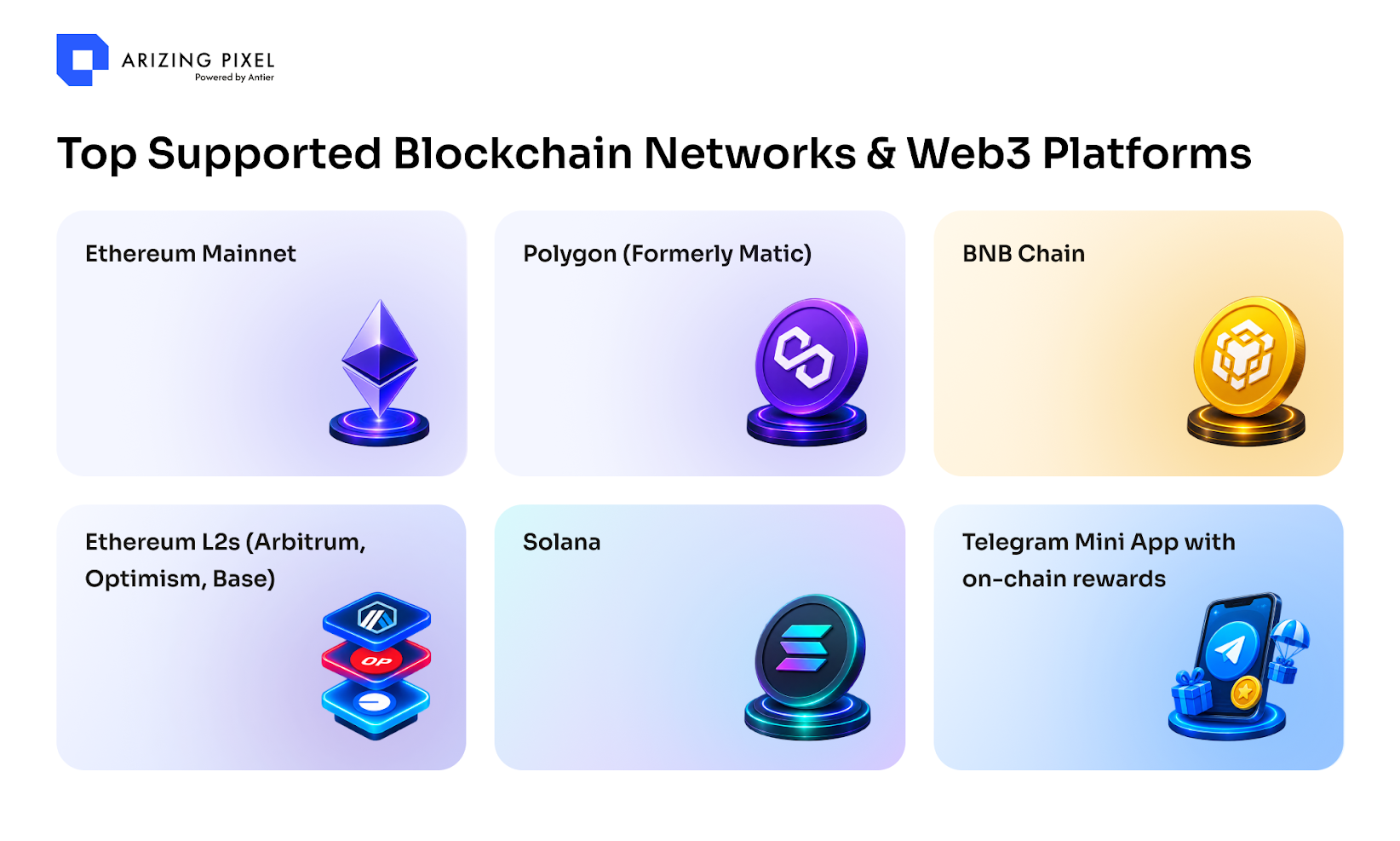
- Ethereum mainnet: Reserved for high-value asset games where settlement finality justifies gas costs. NFT titles with significant per-asset value and an existing Ethereum-native collector audience.
- Polygon (formerly Matic): Strong fit for games requiring frequent micro-transactions and fast confirmation times with low fees. Broad wallet support across consumer audiences. Compatible with Ethereum tooling via EVM equivalence.
- BNB Chain: Built for games with large player bases in Southeast Asian and emerging markets. Low transaction costs and deep DeFi composability for staking and reward distribution mechanics.
- Ethereum L2s (Arbitrum, Optimism, Base): Suited for games inheriting Ethereum security with cost profiles closer to Polygon. Growing the developer tooling ecosystem and improving player wallet support from 2025 into 2026.
- Solana: High throughput and sub-second finality make it viable for fast-paced titles where on-chain confirmation needs to match gameplay speed. Ecosystem tooling has matured significantly since 2023.
- Telegram Mini App with on-chain rewards: An increasingly viable distribution channel. Telegram’s user base creates a ready player pool; blockchain rewards and tokenized assets layer on top of the mini-game through wallet connections without requiring players to navigate a separate launcher.
The right blockchain game development services engagement makes this decision in the architecture phase, not after the game mechanic is built. Retrofitting chain selection to an existing codebase generates avoidable rework across smart contract logic, wallet integration, and asset marketplace connections.
The Engagement Timeline: What “Concept to Live” Actually Looks Like
Realistic timeline expectations are the most consistently missing element in game development content. Here is a representative phase structure for a mid-scope P2E or NFT-integrated title, based on the capabilities confirmed across studio-level blockchain game development solutions engagements.
Phase 1: Architecture and Tokenomics Design
- Chain selection finalized with documented rationale
- Token model designed, including supply, emission schedule, staking, and burn mechanics
- Smart contract architecture mapped before any code is written
- Wallet integration approach confirmed by target platform and audience geography
Phase 2: Core Game Development and Smart Contract Build
- Gameplay systems developed in parallel with smart contract architecture
- NFT asset infrastructure covering minting contracts, metadata standards, and marketplace compatibility
- Gas efficiency addressed at the smart contract architecture level
- Decentralized governance scoped and integrated where aligned with the tokenomics model
Phase 3: Integration and Internal QA
- On-chain and off-chain systems connected: game state, wallet state, asset ownership
- Smart contract audit preparation: structured review of all contracts ahead of third-party audit submission
- Analytics dashboards configured for player behavior and economy monitoring
- Cross-chain protocol integration tested if multi-chain launch is planned
Phase 4: Soft Launch and Live Ops Setup
- Staged rollout with wallet onboarding support
- Real-time reward distribution systems confirmed under load
- Community governance systems activated
- Live ops monitoring in place before full launch
A narrower-scope project, such as a Telegram mini-game with tokenized rewards and a lightweight NFT layer, can simplify architecture and development. The key is establishing the right technical foundation early.
Structured tokenomics design before development helps align gameplay, smart contracts, rewards, and NFT systems, supporting a more stable product from launch onward.

This is The Right Moment To Scope Your Technical Roadmap.
How Are Results Measured in Blockchain Game Development?
Founders evaluating a blockchain gaming development company after delivery often ask the wrong questions. Portfolio screenshots and token launch announcements are visible but not diagnostic. Meaningful outcome evaluation looks at economic stability, not just launch activity.
Signals of a sound blockchain game economy post-launch:
- Token price stability over the first 60 to 90 days, not just launch spike, is a function of emission design and sink mechanics built during tokenomics design, not of marketing spend
- Daily active wallet counts sustained at or above soft-launch levels indicate that the reward structure retains players rather than burning out early adopters
- Smart contract gas costs that remain within projected ranges under peak load reflect architecture-level optimization, not post-launch patches
- NFT asset trading volume and marketplace liquidity in the first quarter after launch indicate whether the asset model was designed with secondary market dynamics in mind
- Governance participation rates, for titles with community governance, reflect whether the decentralized governance module was built into player experience rather than appended
These metrics are the outcomes of decisions made in Phases 1 and 2. Sound tokenomics modeling and gas-optimized smart contract architecture in the early phases produce the economic stability that post-launch iteration alone cannot replicate.
Questions to Ask Before Hiring a Blockchain Game Development Studio
- What should I look for when hiring a blockchain game developer or studio?
- How long does it take to build a blockchain game with a dedicated studio?
- Should I hire freelance blockchain game developers or a dedicated studio for custom blockchain game development?
- How are outcomes from blockchain game development services typically evaluated?
- Which platforms and tools are used in professional blockchain game development in 2026?
Once these factors are clear, the next step is to evaluate how they come together in a development partner and what separates a technically capable team from one equipped to deliver a production-ready blockchain game. The conclusion brings these considerations together to help you make a more informed hiring decision.
Conclusion
Blockchain gaming is a $17.82 billion market in 2026 with 4.66 million daily active wallets sustaining engagement through broader Web3 volatility. The hiring constraint is not capital or player demand. It is the structural scarcity of qualified technical talent and the coordination cost of assembling that talent without an institutional production system already in place. Founders who successfully ship blockchain games with sound on-chain economies treat chain selection, tokenomics design, and smart contract architecture as interconnected decisions made together, rather than sequentially.
At Arizing Pixel, we deliver a complete stack as a single engaged relationship, which is why teams looking to hire blockchain game developers that actually ship choose to work with us.
Frequently Asked Questions
01. Why should I hire a dedicated blockchain game development studio instead of a freelancer?
A dedicated studio offers a single contractual relationship covering the full scope of development, ensuring accountability and integrated expertise in multi-chain architecture, tokenomics, and smart contract readiness, which freelancers may lack.
02. What is the current market size of blockchain gaming in 2026?
The blockchain gaming market is valued at $17.82 billion in 2026, with a projected growth to $110.56 billion by 2030, reflecting a compound annual growth rate of 58.8%.
03. How can I evaluate blockchain game developers effectively?
Evaluate developers by assessing their accountability, chain expertise, tokenomics ownership, and readiness for smart contract audits, comparing dedicated studios to freelancers to ensure a cohesive production system.